
An empire built on old conquest, a priesthood that rules by vision, and a continent that has been through this before.
Most of Palaedia was designed long before any of it got drawn into a panel. What follows is some of the world the story happens in: the map, the animals, and the places that outlived the people who named them.
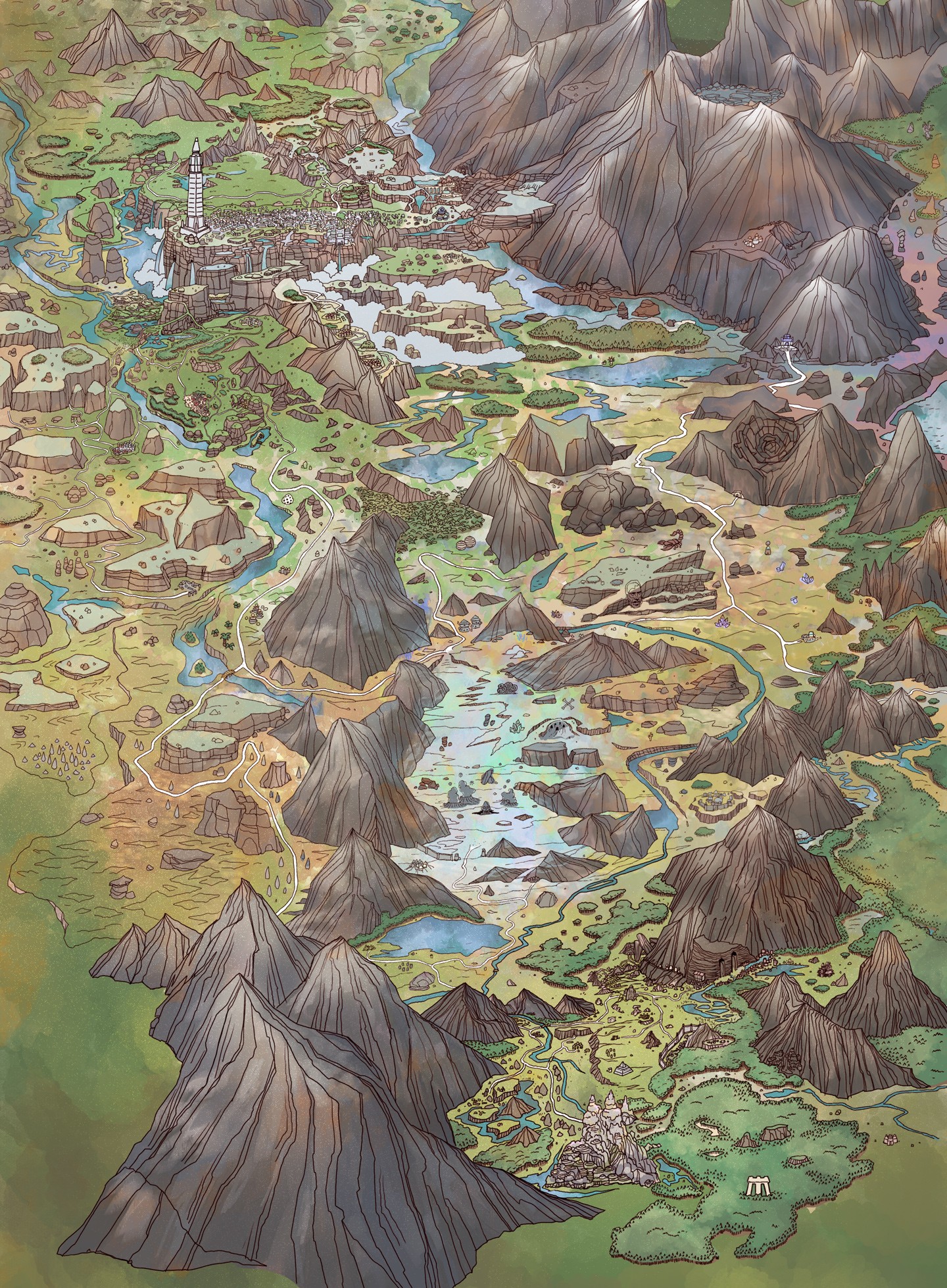
The known world
Printed at the front of Volume One. Click it to see it properly.
Bestiary of the Palaedian Wilds
Five of the animals catalogued at the back of Volume One.

Tetravaris
A common species of passerine bird, found primarily in densely populated urban areas throughout the Palaedian Empire.
They are the dominant scavengers among the family of city-dwelling animals, and are well known to harass pedestrians for food. Highly intelligent, and creative hunters when traveling in flocks.

Medakoi
Regarded as one of several rare and sacred species to the Oracli people. Native to the mountain rivers of Lin, they have been used by the Dyadis for centuries in various rituals across time.
Most notably, they secrete a delicate material during their spawning season that is vital in the construction of the spectral cloaks worn exclusively by the Sacred Knights of Palaedia.
Like many animals revered by the Oracli, they are thought to be ageless. Some captive specimens are documented at more than 300 years old.

Rhodunn Horse
A species domesticated and prized by the Palaedian warriors of old Pell. Though once widespread, they have since become increasingly difficult to breed, and struggle to thrive in the mountainous regions of Lin.
Despite their once ubiquitous presence on the continent, they are now reserved only for the nobility of Palaedia, and a sign of tremendous wealth and status not found anywhere else in the known world.

Lidae
Represented in the social and religious practices of the ancient Dyadis for millennia, and sitting atop the totem of sacred Oracli animals.
They are bred and trained exclusively as guardians for the Oracli priesthood, and have a nurturing and protective instinct towards all Oracli people.
In addition to their disproportionately large ears, they are perhaps best known for the iconic sun pattern on their foreheads. Males can typically range anywhere from 2 to 3 times greater in size than females.
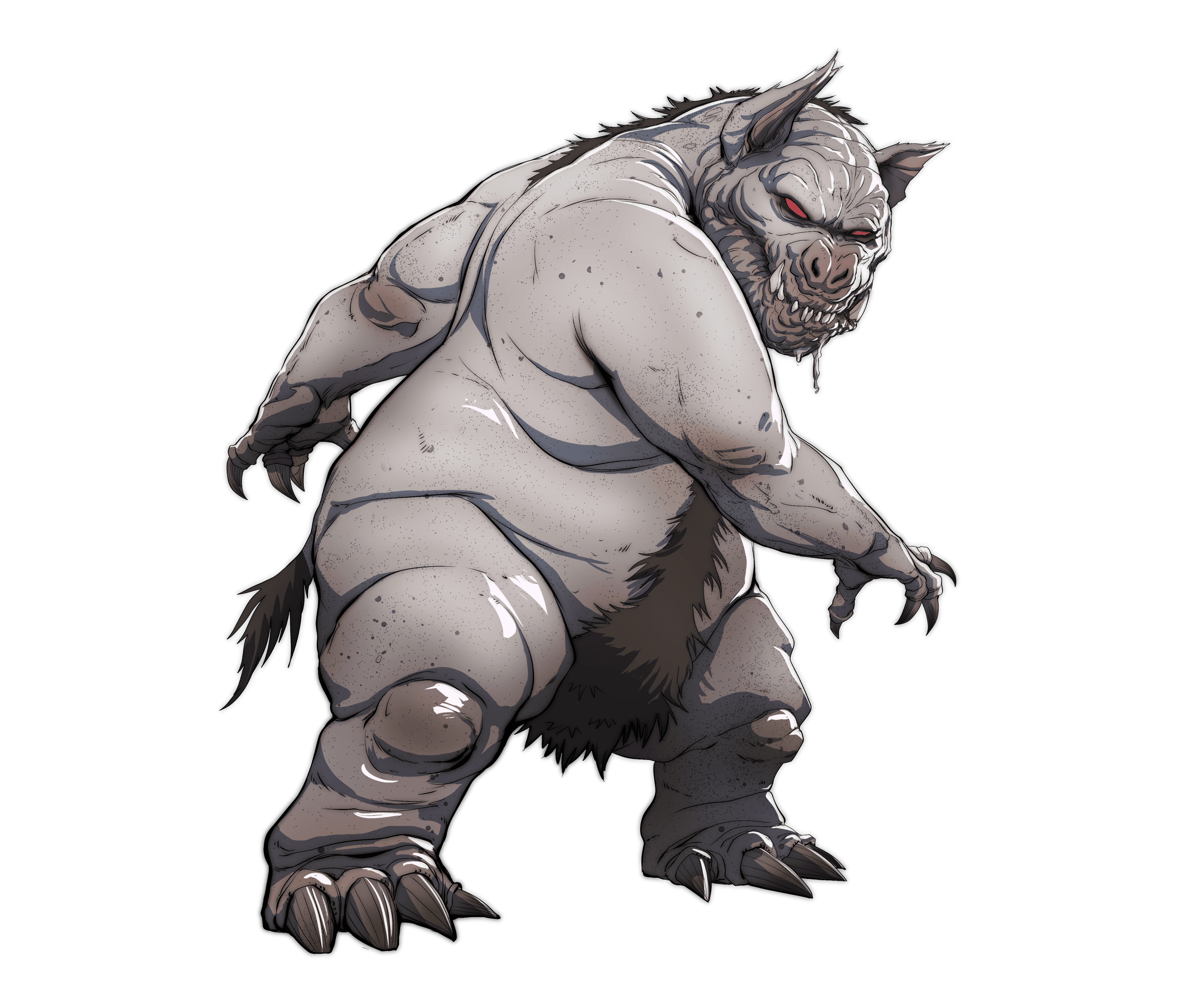
Dampa
The ravenous Dampa is considered one of several apex predators competing throughout the Albeca Caldera. Some attribute its massive size to the nutrient-rich volcanic materials present in the living creatures it consumes on a daily basis.
The creature itself is difficult for ordinary human hunters to overcome, often requiring arcane specialty or other experimental weaponry.
Though they bear a distinct snout in common with some members of the southern Honaru family, they are an entirely unrelated species.
Where it happens




All of this is in the book
Volume One is 148 pages and free to read, bestiary included.